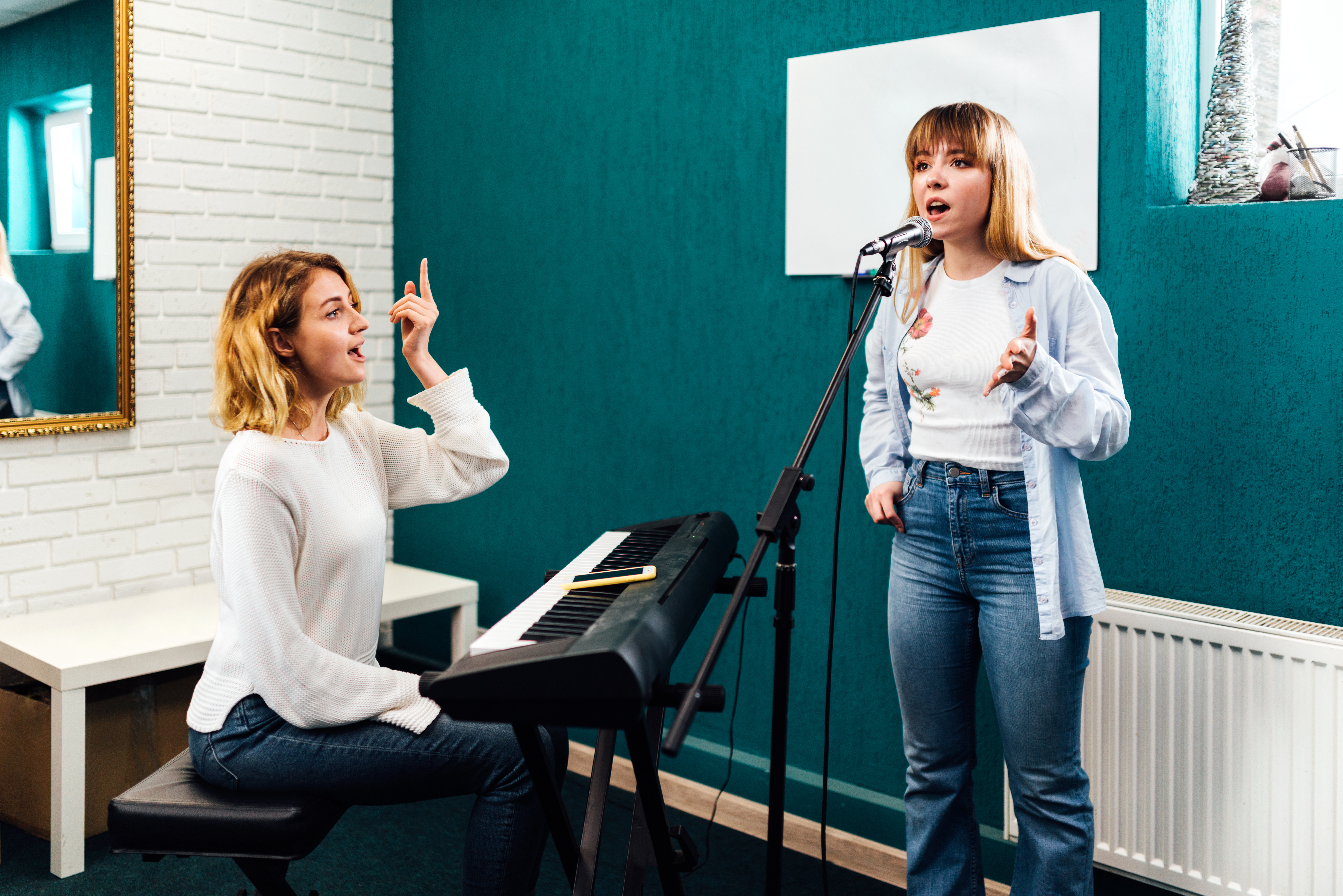
Picture a parent in your town deciding, tonight, that it’s finally time for their kid to start lessons. What do they do? They pull out their phone and search “piano lessons near me.” Whoever shows up at the top of that little map gets the call. Everyone below the fold gets nothing.
That search result is not random, and it’s not reserved for big schools with marketing budgets. It’s the product of local SEO, and it might be the highest-return, lowest-cost way for an independent teacher to fill a studio. The best part? Most of your competitors are doing it badly or not at all, which means the door is wide open for you.
This is a complete, practical guide to music teacher SEO for the local search results that actually bring in students. We’ll start with the single highest-ROI move, then work through everything else in order of impact. None of it requires a marketing degree, and almost all of it is free.
If you’re building your whole growth plan, this guide is one piece of the puzzle. Start with the overview in how to get more music students, then come here to go deep on getting found.
What “Local SEO” Actually Means for Teachers
SEO stands for search engine optimization, which is a fancy way of saying “making it more likely you show up when people search.” Local SEO narrows that to searches tied to a place, which is exactly how families look for lessons: “guitar lessons near me,” “violin teacher in [your town],” “kids piano lessons close by.”
Two things show up for those searches, and you want both:
- The map pack. The little map with three businesses pinned on it, sitting right at the top of the results. This is prime real estate, and it’s driven almost entirely by your Google Business Profile.
- The regular local results. The standard blue links underneath, where your website can appear if it’s set up well.
Why does this matter more than almost any other marketing you could do? Because a “near me” search is about as high-intent as it gets. Nobody searches “flute lessons near me” for fun. They’re ready to start, they just need to find someone. Local SEO puts you in front of people at the exact moment they’re looking to buy, in the exact area you actually serve. That’s a rare combination, and it’s worth getting right.
Start Here: Your Google Business Profile
If you do only one thing from this entire guide, do this one. Your Google Business Profile (GBP) is the free listing that decides whether you appear in the map pack, on Google Maps, and in that panel on the right side of the results. For a local teacher, it is the highest-ROI move there is, full stop.
Here’s how to set it up properly:
- Claim or create it. Go to Google Business Profile and search for your studio. If a listing already exists, claim it. If not, create one. It’s free and takes about fifteen minutes to start.
- Choose the right primary category. This is one of the strongest ranking signals, so be precise. “Music instructor” or “Music school” usually fits best. Add secondary categories if they genuinely apply.
- Decide how to handle your address. If you teach from a commercial studio, list the full address. If you teach from home and would rather not publish it, set yourself up as a service-area business instead. You can hide your street address and simply list the towns you serve, which is perfect for home studios and online teachers who still want to rank locally.
- Fill in every single field. Hours, phone number, website link, and a description packed with the words families actually search, like the instruments you teach and the ages you work with. Empty fields cost you rankings and trust.
- Add real photos. Your teaching space, you at the instrument, students at a recital (with permission). Listings with genuine photos get far more clicks than bare ones. Refresh them now and then.
- List your services. Add each lesson type you offer so families can see at a glance what you do.
- Use Google Posts. These are short updates, a bit like social posts, that appear on your profile. A quick note about fall openings or an upcoming recital keeps your listing active, and active listings tend to rank better.
- Turn on and answer messages and questions. The Q&A section lets people ask things publicly. Seed it with a few common questions and answers yourself, and respond quickly when real ones come in.
Once your profile is claimed and complete, you are already ahead of most teachers in your area. But there’s one ingredient that separates the top of the map pack from the rest, and it deserves its own section.
Reviews: Your Local SEO Superpower
A few principles make review-gathering painless:
- Ask at the peak. Right after a recital, a passed exam, or a proud parent moment, that’s when people are happiest to say something kind.
- Make it stupidly easy. Send a direct link to your review page. Every extra step loses people. Google lets you generate a short “review us” link you can text or email.
- Ask consistently, not once. A steady trickle of recent reviews signals an active, trusted studio. Recency matters, so build asking into your routine rather than doing one big push and stopping.
- Respond to every review. Thank the happy ones and answer any critical ones calmly and professionally. Google notices engagement, and so do prospective families reading along.
- Never buy fake reviews. It violates Google’s rules, it’s easy to spot, and it can get your listing suspended. Real reviews from real students are the only ones worth having.
- For a deeper playbook on turning happy families into referrals and reviews, see getting referrals and reviews for your studio.
How MakeMusic Studio helps: Great reviews come from great experiences. When billing runs itself, scheduling is painless, and families never get chased for a payment, they walk away genuinely happy, which is exactly the frame of mind that produces five-star reviews. MakeMusic Studio keeps the whole client experience smooth with automated payments, easy rescheduling, and clear communication, and it keeps your client contact details organized so reaching out for a review is quick. The best review strategy is a studio that’s a pleasure to be a part of.
Optimize Your Website for Local Search
Your Google Business Profile gets you into the map pack. Your website is what earns the regular local results and gives interested families a place to learn more and take action. A few essentials:
- Put your location in the right places. Your town or region should appear in your page titles, your main headings, and naturally throughout your text. “Piano lessons in [City]” beats a generic “Piano lessons” every time for local search.
- Have a clear contact or location page. Include your service area, an embedded Google map if you have a public address, and an obvious way to get in touch or book.
- Be fast and mobile-friendly. The overwhelming majority of “near me” searches happen on phones. If your site is slow or awkward on mobile, you lose people before they ever read a word.
- Create a page per area if you serve several. If you draw students from a few neighboring towns, a dedicated page for each, written naturally and not stuffed with keywords, can help you rank in each one.
Write real page titles and descriptions. The clickable headline and summary that show up in search results are your storefront window. Make them specific and inviting.
If your site needs work before any of this can land, our music studio website guide walks through what every teacher’s site should include.
Get Your Details Consistent Everywhere
Search engines cross-check your business information across the web to decide whether to trust you. If your name, address, and phone number (often called your NAP) appear three different ways on three different sites, that inconsistency quietly drags down your rankings.
The fix is simple but tedious: pick one exact format for your studio name, address, and phone, and use it identically everywhere. That means your website, your Google Business Profile, your Facebook page, and any directory you appear in should all match to the letter.
Get Listed in the Right Places
Beyond Google, a handful of listings reinforce your local presence and occasionally send students directly:
- The other map services: Bing Places and Apple Maps both have free business listings worth claiming.
- Facebook, with your correct NAP and a link to your site.
- Music-specific directories and teacher association listings, such as your local or national music teacher association, which carry extra trust for our field.
You don’t need to be on hundreds of sites. A dozen accurate, relevant listings beat a hundred sloppy ones.
Create Content That Targets Local Searches
This is where having a blog quietly pays off. Helpful articles and pages that speak to your area and answer the questions local families ask can pull in searchers who aren’t quite ready to call yet. A post answering “what age should my child start piano lessons?” or a friendly FAQ about lessons in your town builds trust and gives Google more reasons to show you. Over time, that library of useful content becomes a moat competitors can’t easily copy.
Measure What’s Actually Working
You don’t need a dashboard obsession. Two simple habits tell you most of what you need:
- Check your Google Business Profile insights. Google shows you how many people found you, called you, requested directions, or clicked to your site. Watch the trend, not the daily wiggles.
- Ask every new student how they found you. It’s the lowest-tech analytics there is and often the most honest. Patterns will emerge fast, and they’ll tell you where to spend your energy.
When a search does send a family your way, the last thing you want is to lose them at the finish line.
How MakeMusic Studio helps: Ranking well only pays off if interest turns into booked lessons. When your profile or site sends a ready family your way, MakeMusic Studio’s online scheduling lets them book against your real availability without the phone tag, and signup and payment setup takes minutes. All that hard-won visibility deserves a smooth, immediate way to say yes.
Common Local SEO Mistakes Music Teachers Make
A few traps catch nearly everyone, and avoiding them puts you ahead:
- Skipping the Google Business Profile entirely. The single most common and most costly miss.
- Inconsistent name, address, and phone scattered across the web.
- Having no reviews, or never asking for them.
- A website that never mentions your town or isn’t usable on a phone.
- Setting everything up once and forgetting it. Local SEO rewards activity, so a stale profile slips over time.
Your First-Week Local SEO Checklist
If the whole picture feels like a lot, start here. Knock these out in your first week and you’ll have covered the moves that matter most:
- Claim or create your Google Business Profile
- Choose the right primary category and complete every field
- Set your address or service area correctly for your situation
- Add at least five real photos
- Generate your Google review link and send it to three happy families
- Make sure your name, address, and phone match across your website, GBP, and Facebook
- Add your town to your website’s homepage title and headings
The Bottom Line
Local SEO isn’t magic, and it isn’t out of reach. It’s a handful of mostly free, mostly one-time moves that keep paying you back every time someone nearby searches for lessons. Claim and complete your Google Business Profile first, build a steady habit of gathering reviews, keep your details consistent, and give your website a local flavor. Do that, and the next time a parent in your town searches “lessons near me,” there’s a very good chance the teacher they find is you.