You know the student. The one who wants to run the piece at full speed on day one, wrong notes and all, because slowing down feels like admitting the passage is hard. (You may know that student well, having once been that student yourself.)
Slowing down is the least glamorous instruction in the studio. It is also the one that works. The trouble is that “play it slower” sounds like a punishment, so it gets ignored the second you turn your back. Understanding why it works is what makes it stick.
The Speed Trap
Playing something fast and sloppy is not practice. It is rehearsal for playing it fast and sloppy.
The brain does not grade effort. It encodes repetition. Every time a student rushes through a run and fumbles the same three notes, those fumbles get a little more permanent. The passage does not need more speed. It needs more clean reps, and clean reps almost never happen at tempo.
Slow Is Where the Learning Happens
Playing a passage slowly gives the hands time to find the right motion before that motion becomes a habit. There is space to notice a cramped wrist, a lazy shift, a finger reaching when it should be relaxed. Fixed once, at a speed where the fix is actually possible, it starts to hold.
Slow practice also keeps a student in the passage long enough to hear it. Fast covers up a lot: uneven rhythm, notes that never quite speak, phrasing that got skipped in the rush to the finish. At half tempo, those things have nowhere to hide, and a student can fix what they can finally hear.
Tempo-Adjusted, Not Just Slow
There is a difference between “play slow” and practicing with tempo on purpose.
Slow is a starting point. The goal is to move the tempo up in small, deliberate steps, staying at each one only until the passage is clean, then nudging it faster. The passage arrives at performance speed already accurate, because it was accurate at every speed along the way. Looping the hard four measures instead of restarting from the top means the reps land where the difficulty actually lives, not on the easy opening a student already owns.
This is a lot to ask a student to manage on their own at home, which is usually where slow practice quietly falls apart.
MakeMusic Studio
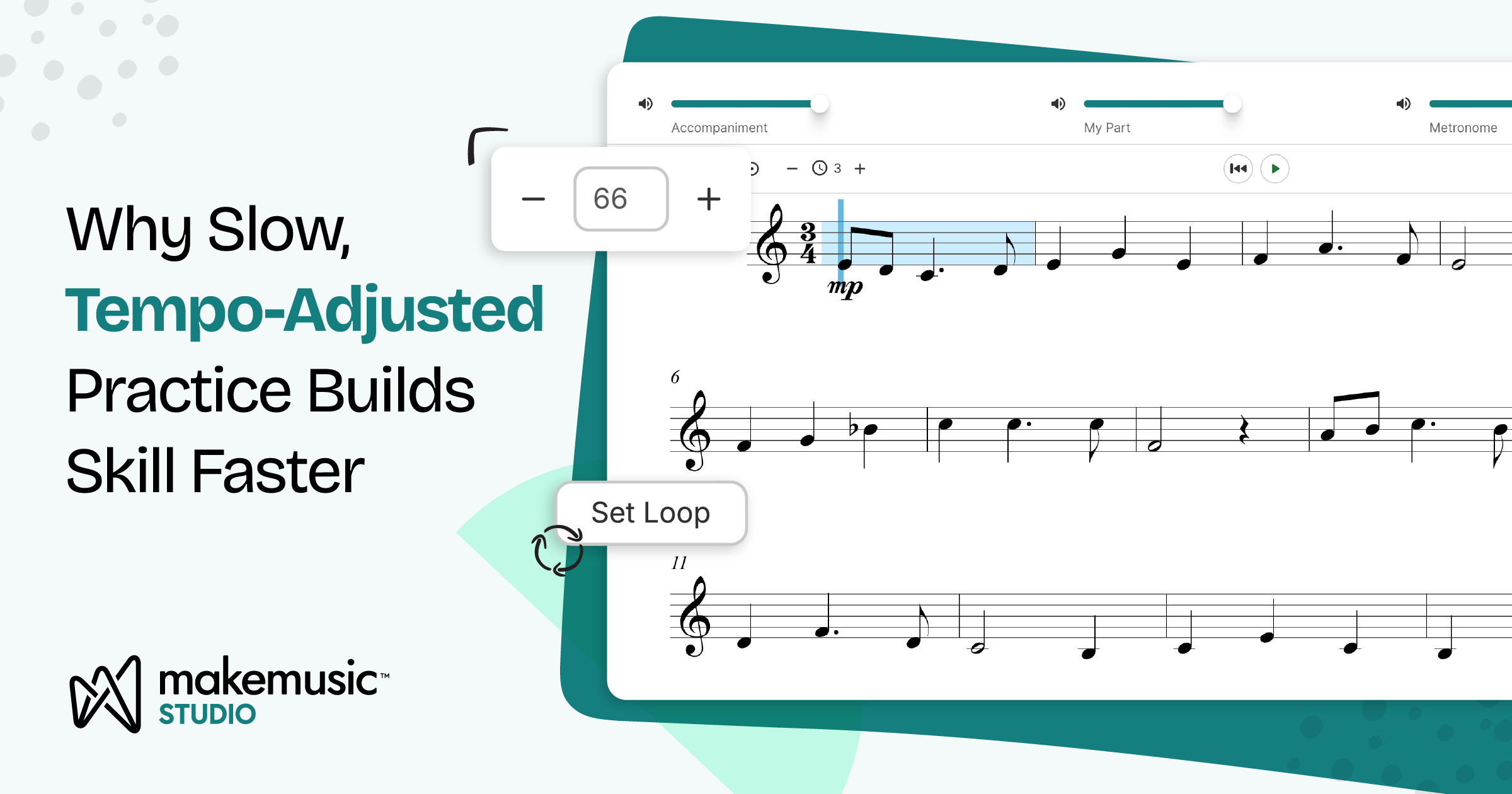
The interactive library inside MakeMusic Studio lets students slow a professionally recorded accompaniment to any tempo and loop a tough passage as many times as it takes, then bring the tempo back up as the notes settle in. They practice with the recording, at a speed where the fix is possible, without needing you in the room to run the metronome. You assign the piece and the tempo work happens at home, the way you actually asked for it.
What This Looks Like at Home
A student sets the passage to a tempo where they can play it correctly, not the tempo they wish they could play. They loop the hard measures. They move up a few clicks only after a clean pass, not before. Ten focused minutes like this will outrun an hour of playing the whole piece fast and hoping the rough spots sort themselves out. (They will not sort themselves out.)
Slow practice asks a student to trade the satisfaction of sounding fast today for the skill of actually being fast next month. That trade is hard to sell to a teenager in the moment. It gets easier when the tool does the tempo work for them, and easier still when they hear the results in the next lesson.
Your job is to teach the music. The reps can take care of themselves.